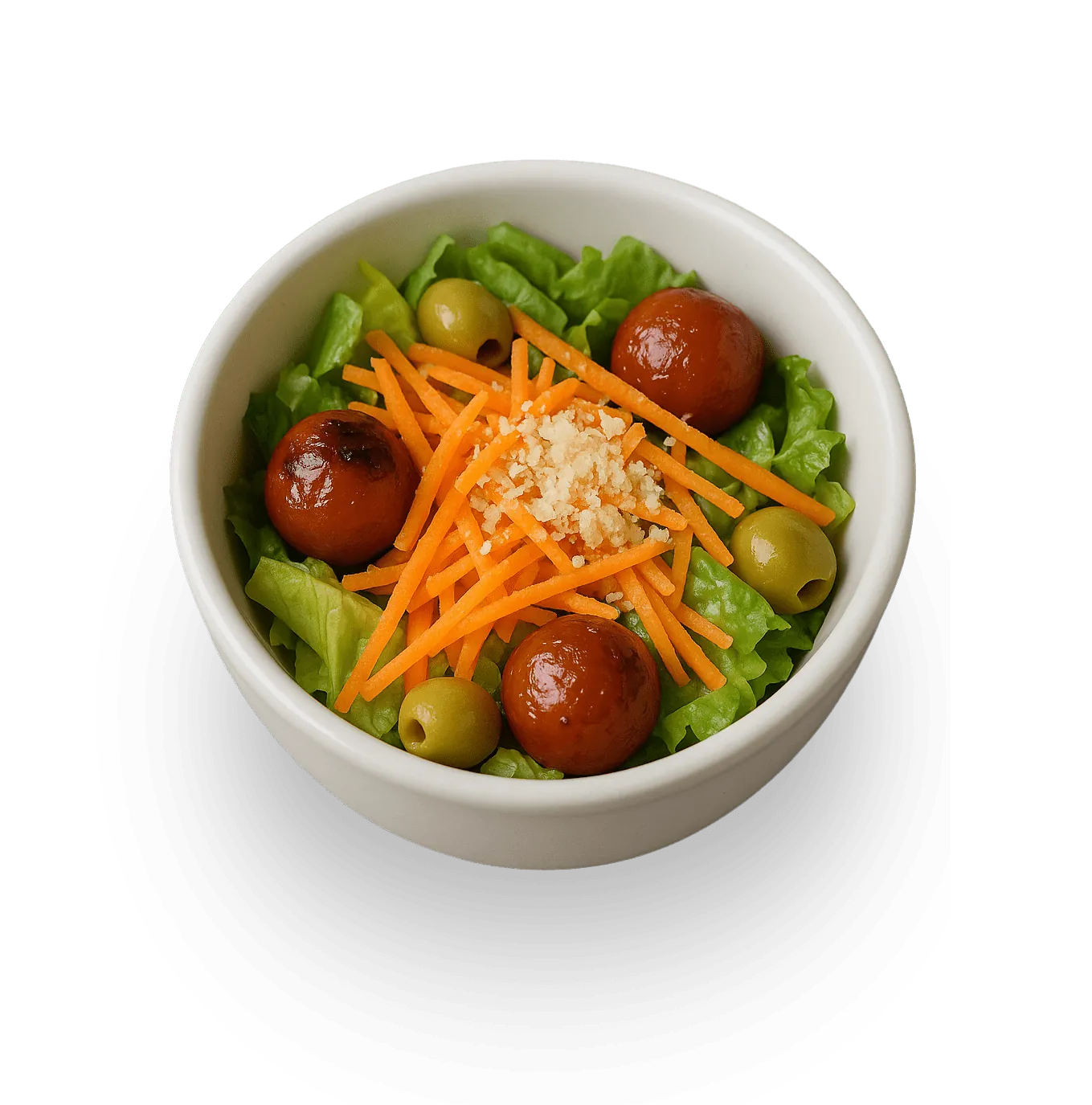
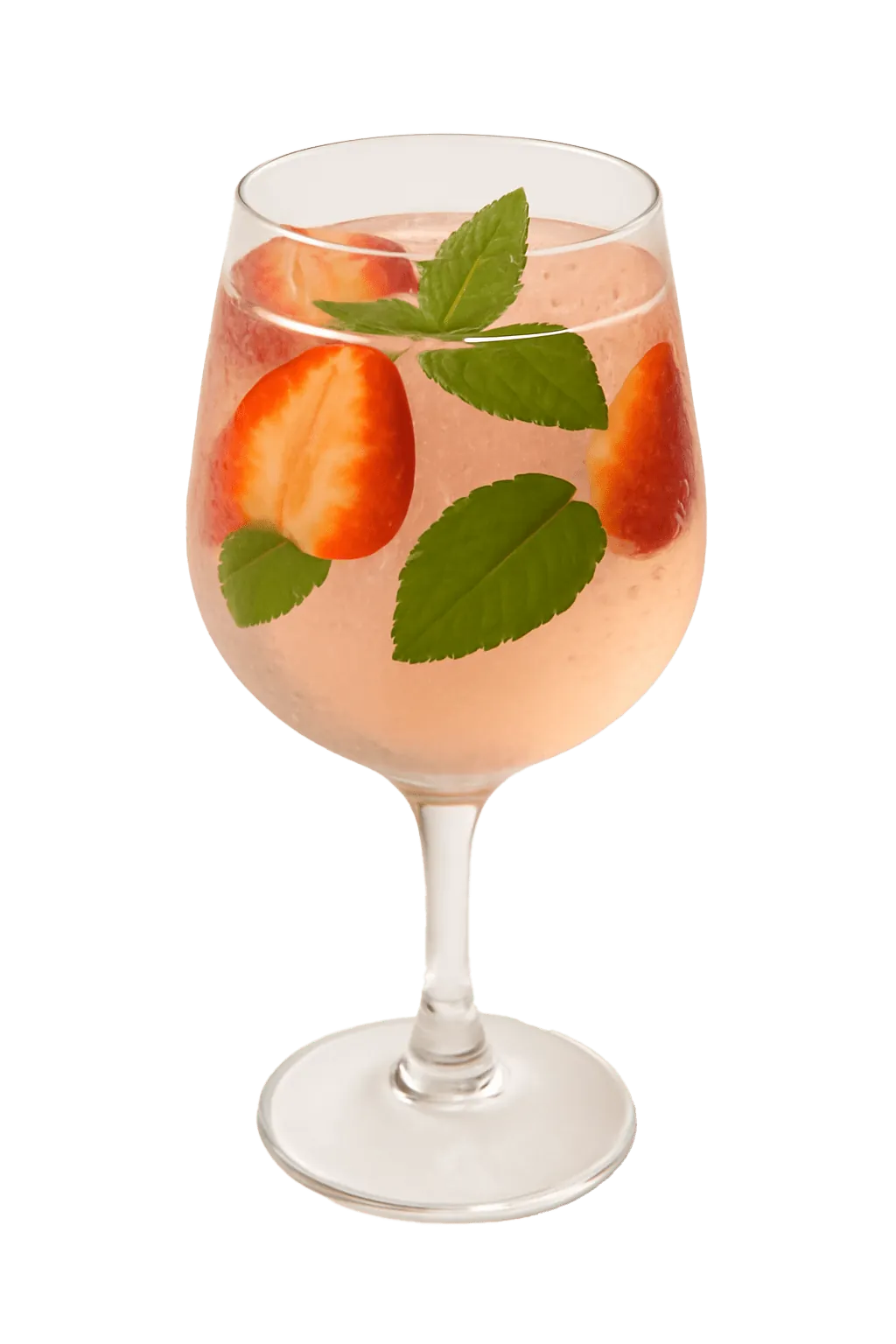
Rapid summary: “Gods of Fire and the Sun” is a 5-tiered tasting menu with pairing, where each plate and cocktail are inspired by a myth of muisca, Mexican or Inca origin.
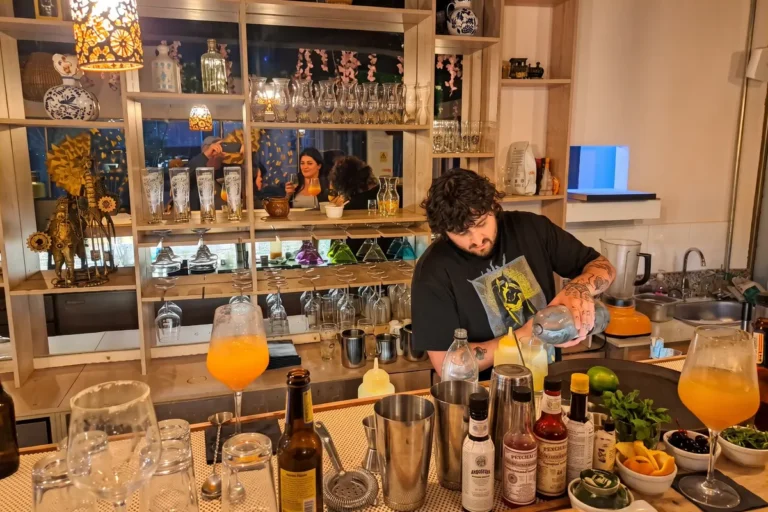
There are menus that only feed, and there are menus that tell a story. “The gods of fire and the sun” He’s from the second group. Each time of the menu takes a native ingredient from Colombia, Mexico or Peru and crosses with a myth of creation of one of these three cultures, with a five step tour from welcome to dessert.
What’s the tasting menu “Gods of Fire and the Sun”
That’s a proposal from Latin American fusion kitchen with guest chefs, thought as a complete experience and not as an open card to choose from. Each of the five times comes with his own pairing, also with his own name and his own mythological reference, and this makes dinner a narrative journey both through his palate and by his cosmovision of three different cultures.
The five times of the menu, one by one
Napaykuy, welcome
The menu opens with Napaykuy, a first sip thought to awaken the palate and open up the path through the myths, flavors and traditions of Colombia, Mexico and Peru before the first plate arrives.
Tonatiuh, the fusion of three cultures
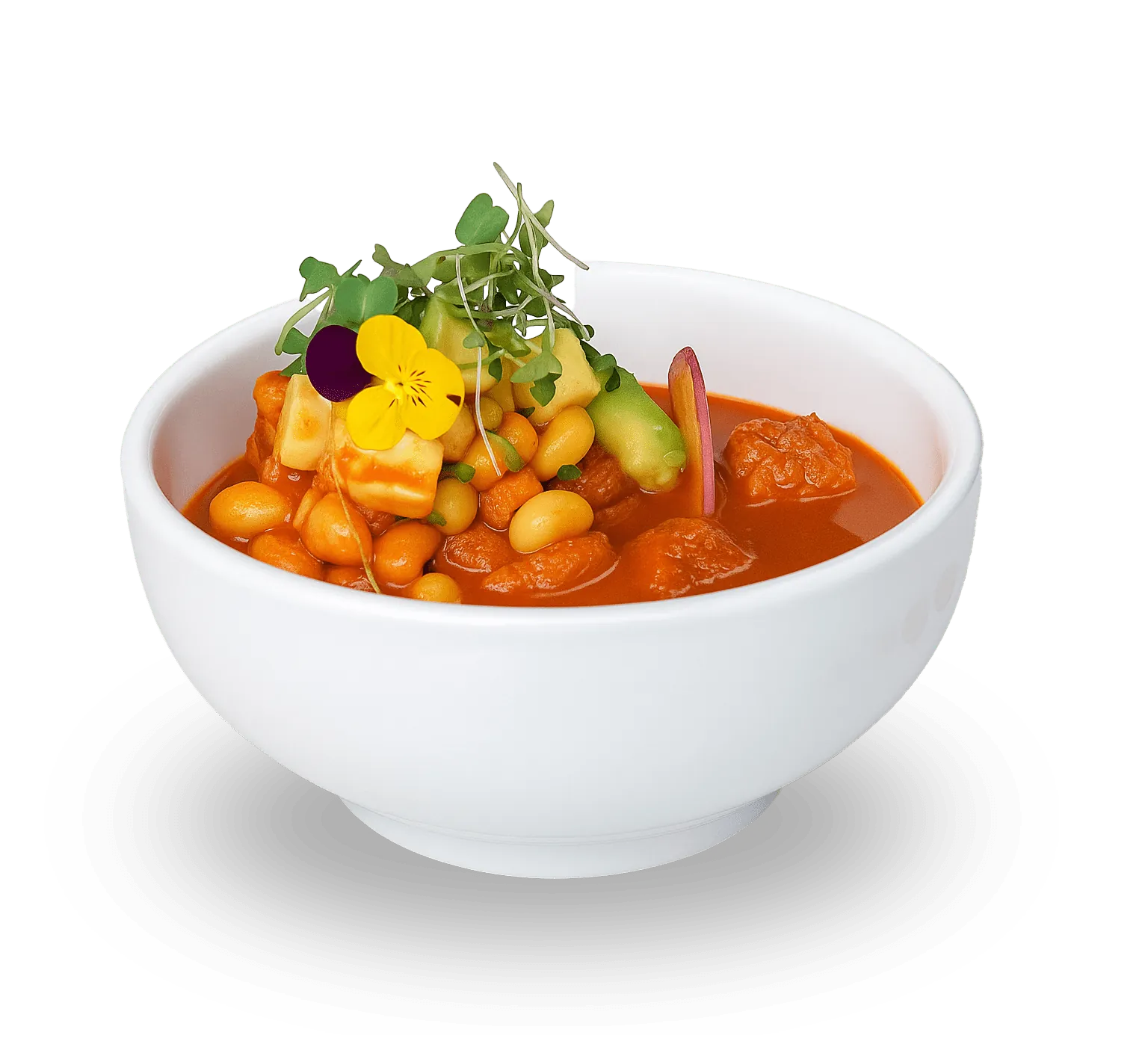
The first time with camote, ducha, lulo, pineapple, ham and sugarcane, a mixture that already combines ingredients from the three kitchens from the first bite. The wine glass Tonalli, a tribute to Tonatiuh, the fifth sun of Mexican mythology, that at this tidal tidal stage represents the rebirth, balance and vital heat that the sun transmits to life.
Chiminigagua, tribute to Colombia
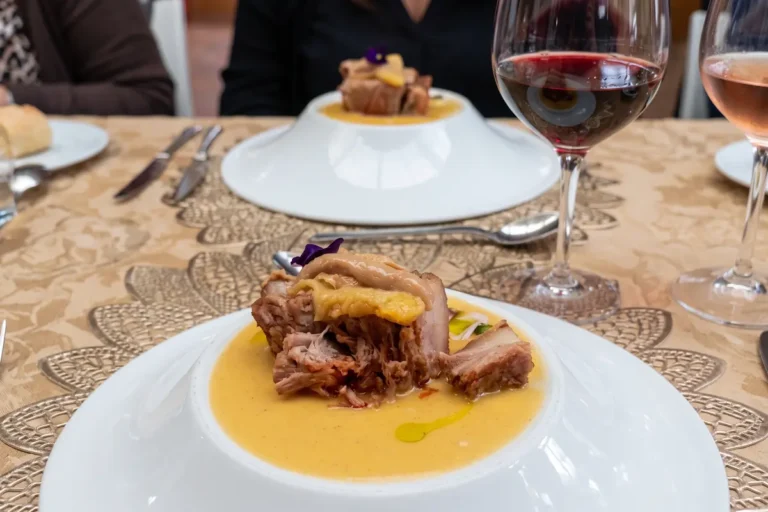
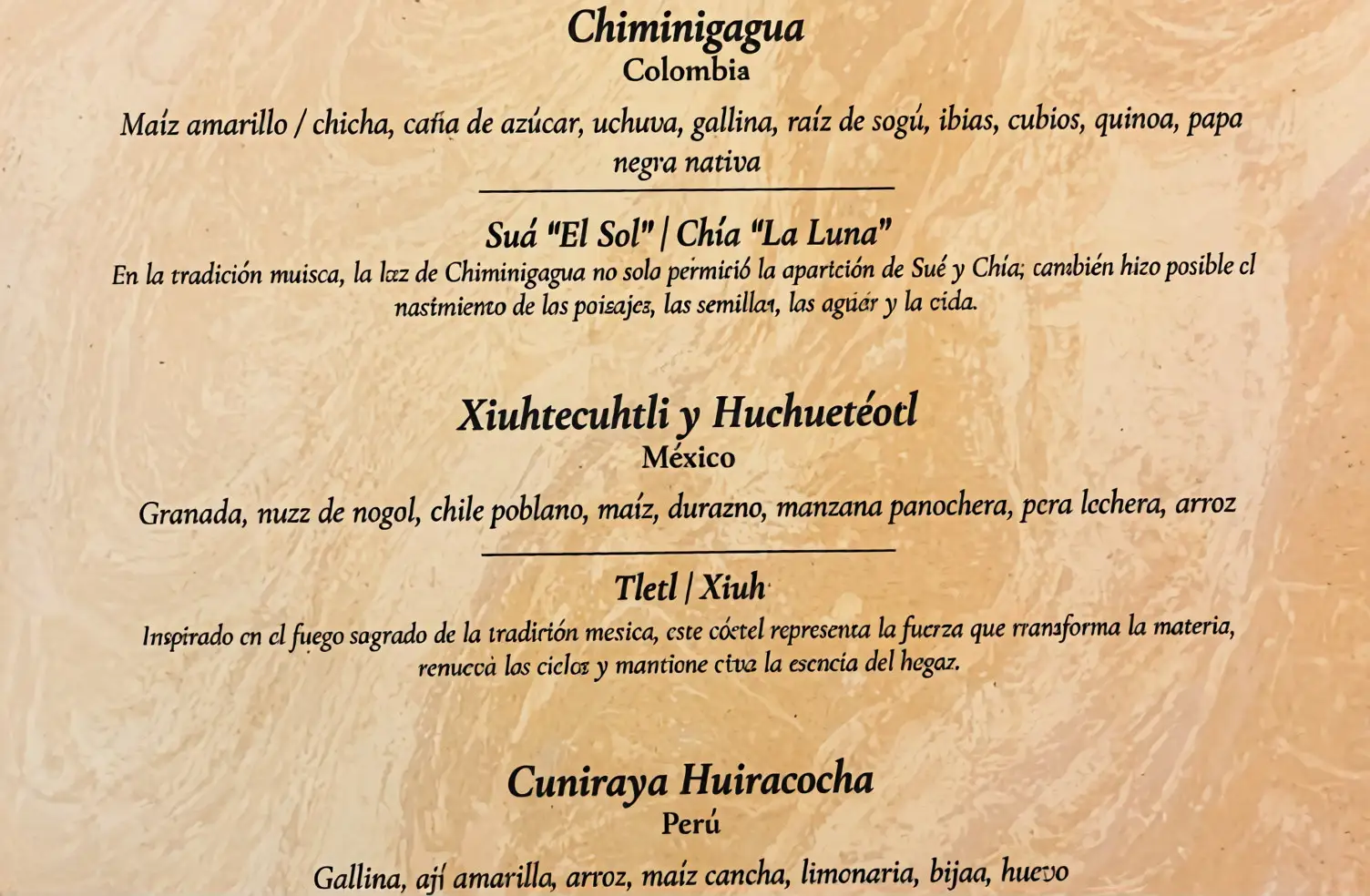
The second time is purely Colombian: yellow corn, chicha, sugarcane, uchuva, chicken, saga root, ibias, cubias, quinoa and native black potato. That’s a guest chef’s play. Diego Barerasand his first awaken awaken place: the Muisca Divinity Chiminigagua, whose light allowed, according to tradition, the birth of landscapes, seeds, waters and lives. The pairing, Sua “El Sol” and Chia “La Luna,” regains that same cosmovision and connects the plate directly with the area where the restaurant is.
Xiuhtecuhtli and Huehuetéotl, Mexican fire
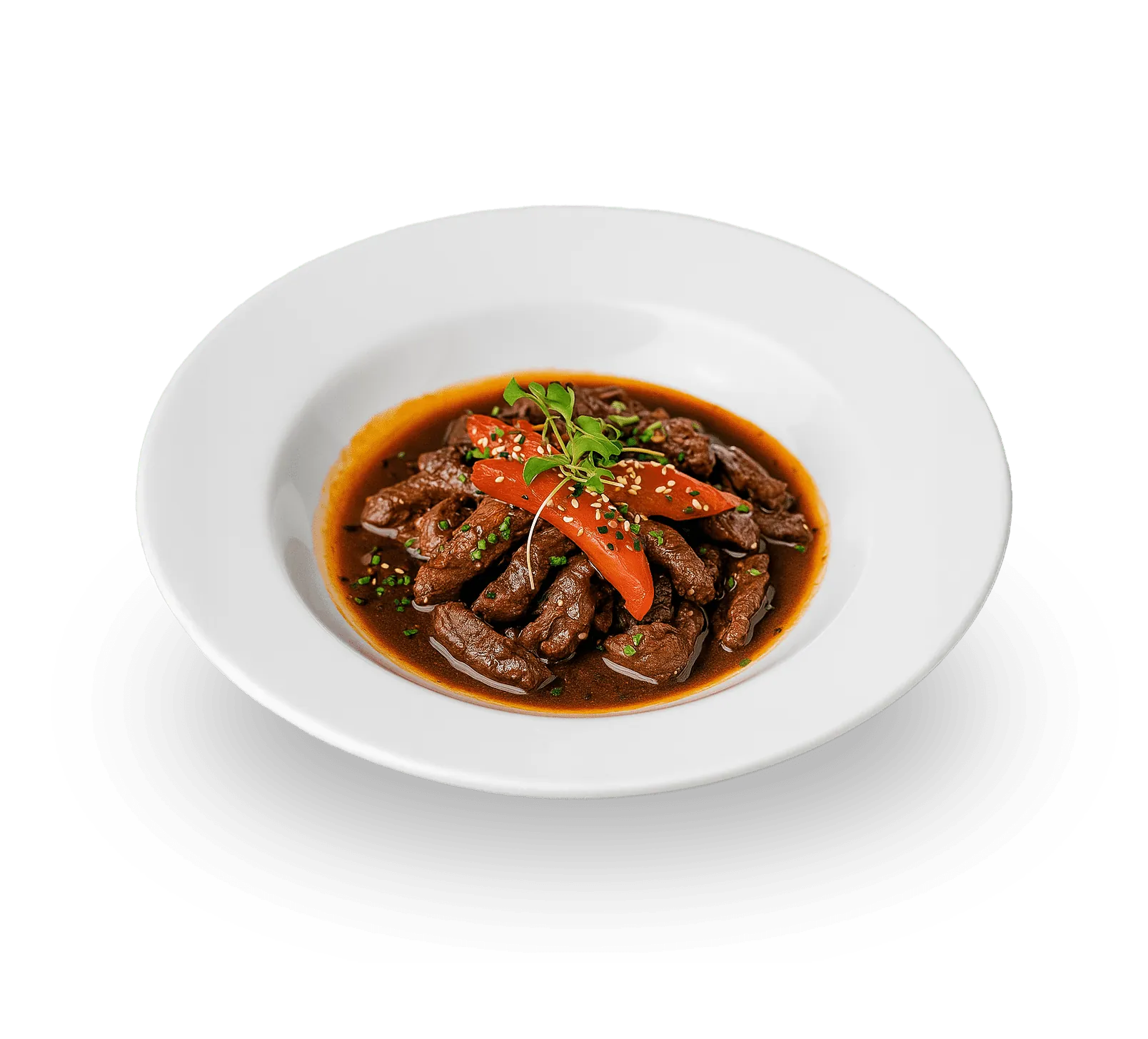
The third time looks to Mexico with pomegranate, walnut nut, pawnish chili, maize, pawnah, pawnah apple, dairy and rice, in honor of Xiuhtecuhtli and Huehuetéotl, deities of fire in Mexican tradition. The cocktail that accompanies him, Tletl) 124 and Xiuh, is inspired by the holy fire of that tradition: the force that transforms matter, revens cycles and keeps the essence of the home alive.
Cuniraya Huiratoccha, the Peruvian dish
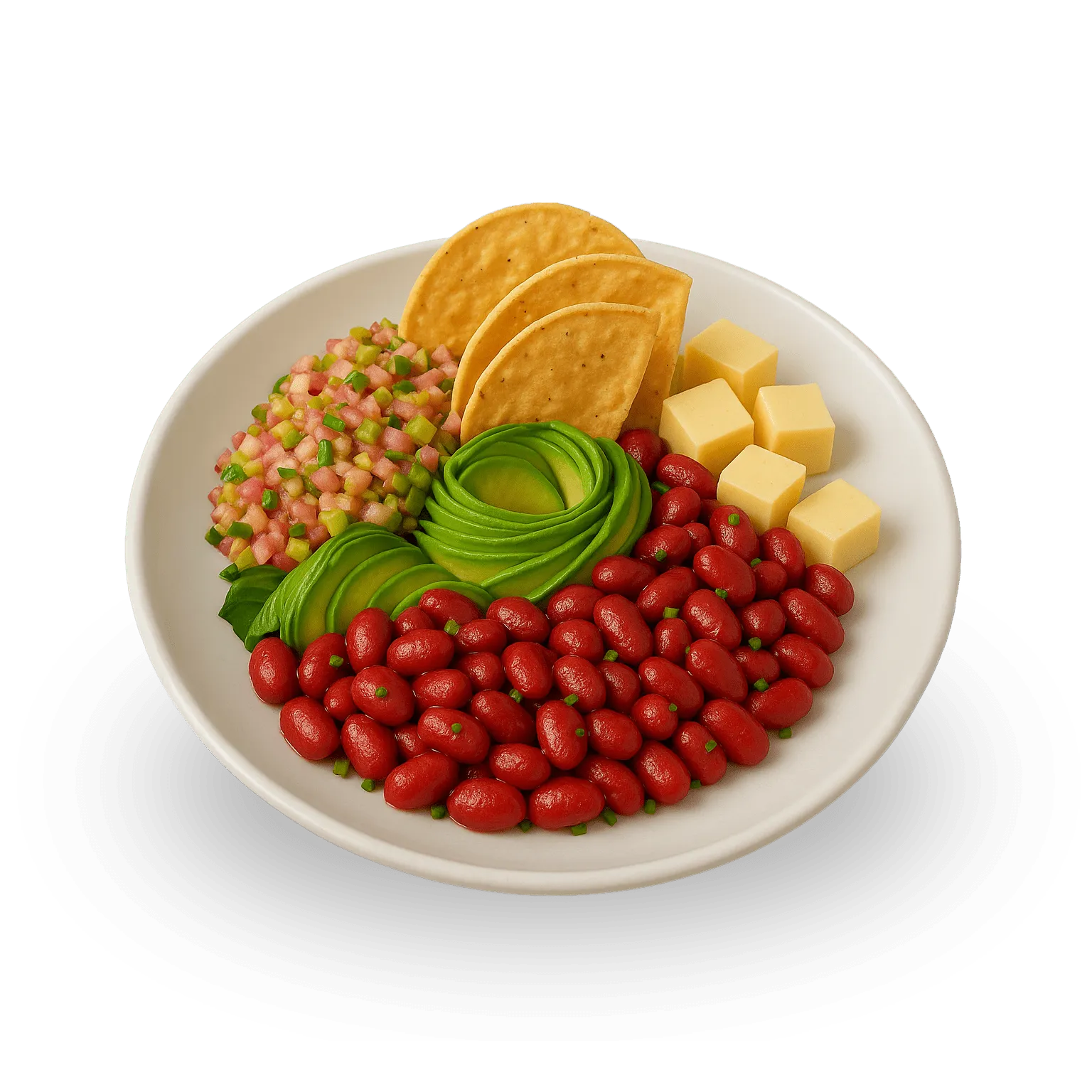
The fourth time includes chicken, yellow ham, rice, corn court, lemonaria, bijao and egg, work by guest chef Milena Castro, referring to Cuniraya Huiracocha, an figure of Andean mythology, part of the same Peruvian gastronomic tradition That’s already been put up at other plates of the letter. His marriage, Yachay) 124, Sumaq Sunqu, is inspired by an Andean account that true greatness does not depend on appearances but on wisdom, humility and connection with the earth, an idea that the cocktail seeks to transmit at every sip.
Are, the closure of three cultures
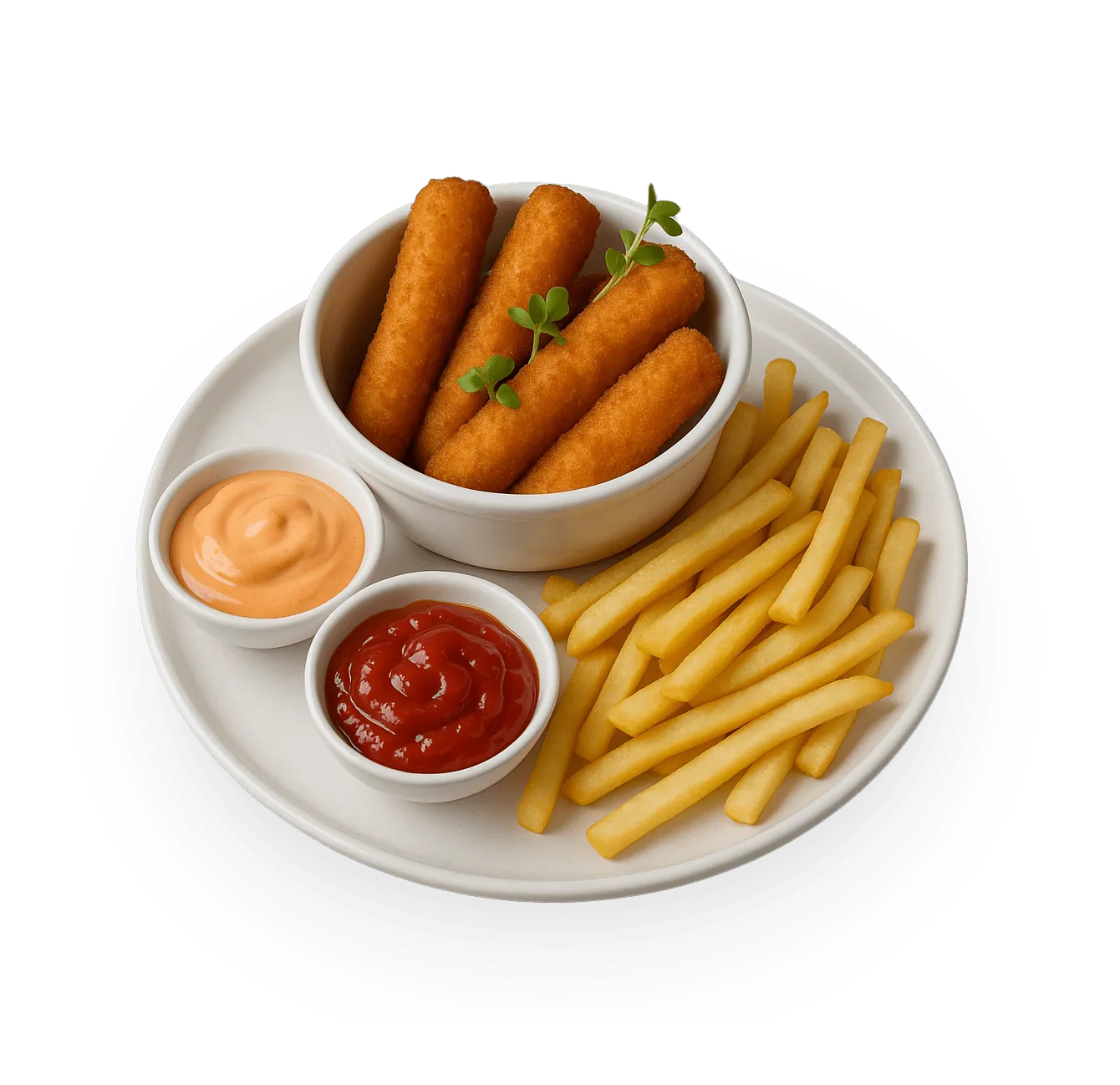
The menu closes with Be, another melting time that combines yellow maize, chicha, butter, sugarcane, wheat, milk and egg. The Red wine glass Huñuy, inspired by Are, was accompanied by the shade of the Muisca tradition, and with this marriage celebrates the origin, union and legacy that was born as different cultures come across, a closure that sums up well the spirit of the whole menu.
The native ingredients that hold up the menu
What’s different from a generic tasting menu from “gods of Fire and the Sun” is the insistence on rare native ingredients in a restaurant letter: ibia, cubias and native black potato, Peruvian court corn, poblano chili and Mexican panochera apple. None of these ingredients appear by accident. Each person responds to the original cuisine of the time that’s been included, and this means that the menu also works as a way to get to know products that rarely get to a table outside their region.
The guest chefs behind the menu
Two times “The gods of fire and the sun” have been signed with guest chefs: Diego Barerasand his author, Shiminigagua, and Milena Castro, complainant of Cuniraya Huiratcha. That dedicated collaboration is part of what’s different from this type of menu with regular letter and confirms that this type of experience is often organized biannual at the restaurant, as an isolated event.
How to live a 3 Soles tasting menu night
Unlike regular card, this type of menu is served as complete experience, time by time, with its matching pairing at each step. The dynamic is designed to have each plate and each cocktail served as appropriate within the tour, rather than free choice of order as at an an an an an an atla carte dinner.
If you have little time, ask for this.
If you cannot attend an edition of the tasting menu, the regular letter has several plates with that same spirit of native ingredients and fusion:
- Governor Tacos ($51,200) with guajillo chili, chipotle and jalapeno.
- Chamberham chaifa ($46,900), Peruvian-Chinese fusion with Asian-Latino date.
- White fish with copoazoo butter ($68,800) with an unusual Amazon superfruit outside his region.
- Fitted with a deconstructed dessert, sweet house’s sign.
Is the tasting menu available every day?
No, this type of menu is often arranged bimonthly, linked to events, anniversaries or corporate reserves, and not as part of the regular letter available daily.
How many times does the “gods of fire and the sun” menu have?
Five times, as well as welcome, each with his own pairing.
Are the pairing included in the menu?
Yes, every time comes with a cocktail or glass of wine intended specifically for that production.
What cultures are the menu inspired from?
From the muisca mythology of Colombia, Mexico and Peru, one for every main time more the closure of fusion.
How do I figure out about the next date of the tasting menu?
The best way to get a direct consultation with the restaurant as this type of experience isn’t repeated with the same frequency as the regular card.
If you’re interested in living this experience, check soon dates of the tasting menu and know how soon it’s back “The gods of the fire and the sun.”